Some nights, the sky does most of the work for you. That's exactly what astrophotographer Astro Chappo experienced during a stay at the Dark Sky Apartments - and the result is a set of images that show why our region is one of the last truly dark places left in Europe.
A galaxy above the mountains
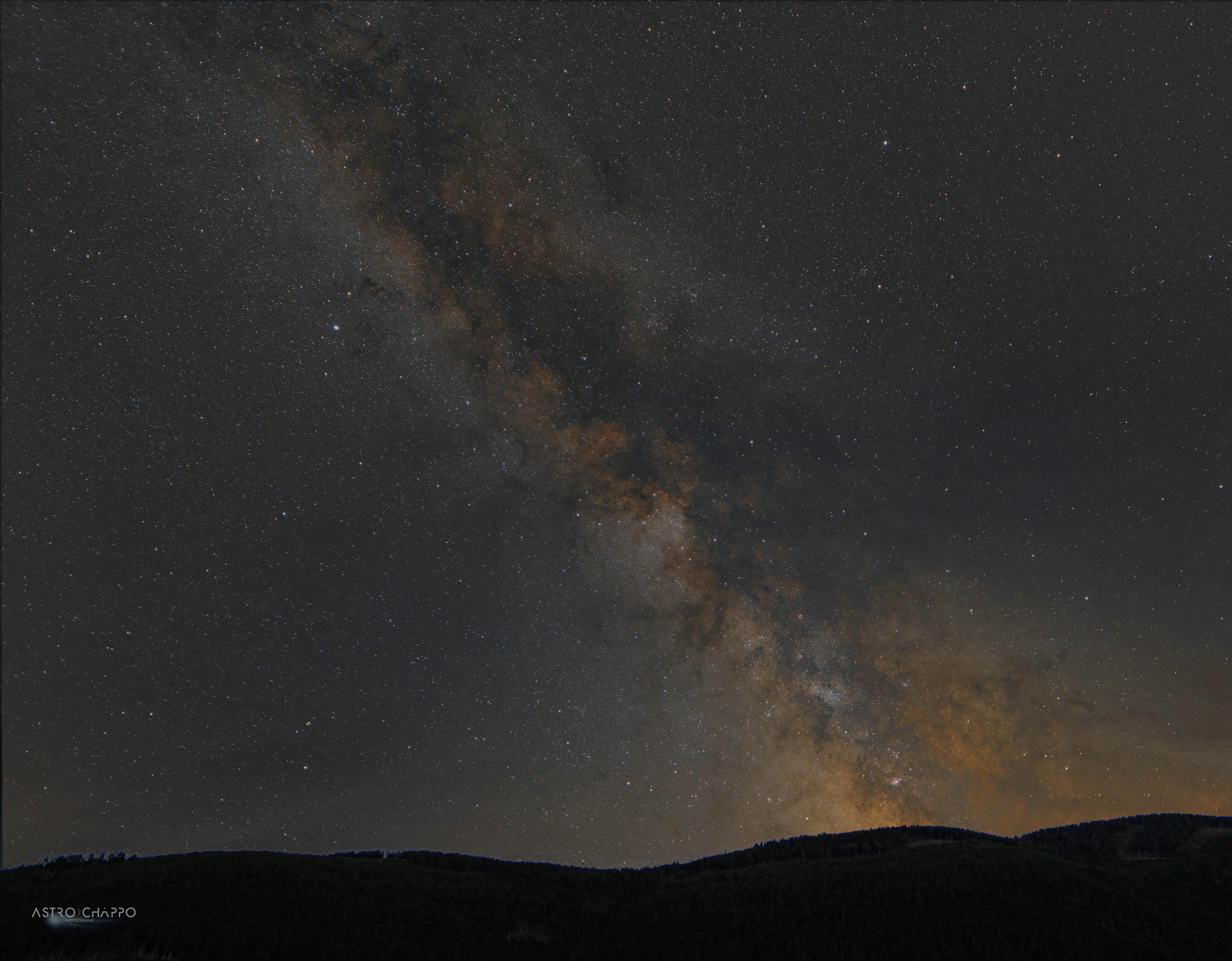
The first shot is a wide-field view of our own galaxy, the Milky Way, rising above the silhouette of the surrounding peaks. No light domes, no orange glow on the horizon - just stars, dust lanes and the soft structure of the galactic core, visible in a way that's become rare almost everywhere else on the continent. This is what a Bortle 2 sky looks like: dark enough that the Milky Way casts a faint shadow, and detailed enough that even a wide-angle shot reveals structures normally reserved for telescopes.
The Elephant Trunk Nebula, up close
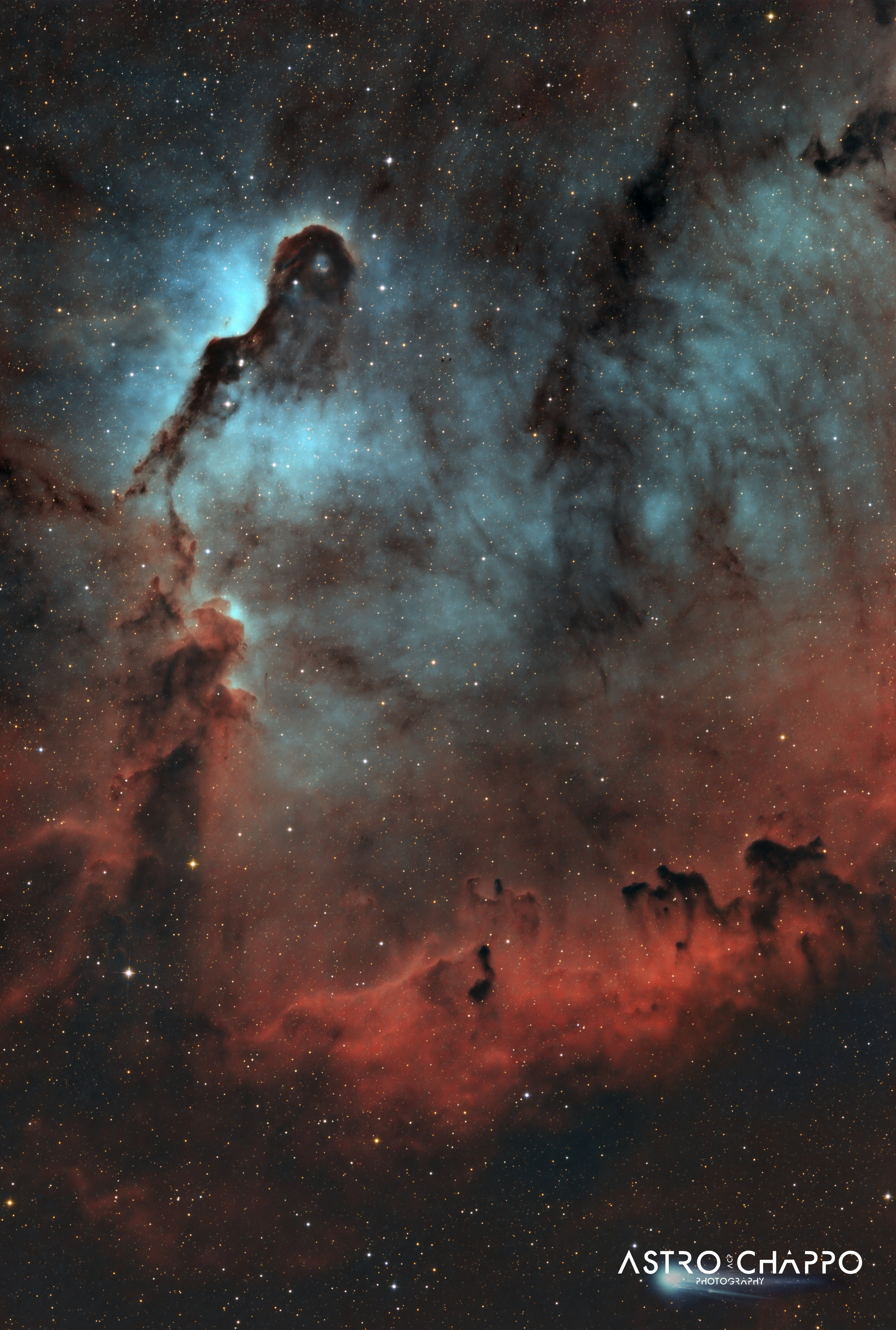
The second image is where it gets technical — and where the value of a dark sky becomes measurable, not just visible. Astro Chappo pointed a 10-inch Newtonian telescope (Teleskop-Service Newton 254/1016 Carbon Photon) at IC 1396A, better known as the Elephant Trunk Nebula, a stellar nursery roughly 2,400 light-years away in the constellation Cepheus. Its trunk-shaped pillar of gas and dust stretches about 20 light-years and is still being sculpted by radiation from nearby young, massive stars - active star formation that's been going on for the past one to three million years. What makes the shot remarkable isn't the equipment alone - a Skywatcher EQ6-R Pro mount, ZWO ASI 2600MC Pro camera and ZWO Asiair Mini are solid, but not exotic. It's the sky. The final image is built from roughly two hours of narrowband exposure plus just twelve minutes of RGB data for the stars - a fraction of the integration time this kind of detail usually requires. Under a light-polluted sky, the same result could easily take ten times as long, if it's achievable at all.
Why the sky matters more than the gear
Astrophotographers spend years and small fortunes upgrading telescopes, cameras and mounts to squeeze out more detail. What often gets underestimated is the one factor no equipment can compensate for: the darkness of the sky itself. A larger aperture gathers more light, but it's the near-total absence of artificial skyglow at the Dark Sky Apartments that lets faint nebular detail survive in the data instead of drowning in background noise. Two hours under Bortle 2 conditions can outperform many hours under a suburban sky. That's the whole idea behind the Dark Sky Apartments: not just a nice view of the stars from the terrace, but genuine working conditions for anyone serious about astrophotography - paired with the quiet and clean mountain air that makes the nights here memorable even without a camera. Whether you're planning your next deep-sky project or simply want to see the Milky Way with your own eyes for the first time, book your stay and find out what a truly dark sky can do: www.darkskyapartments.com Images © Astro Chappo Photography